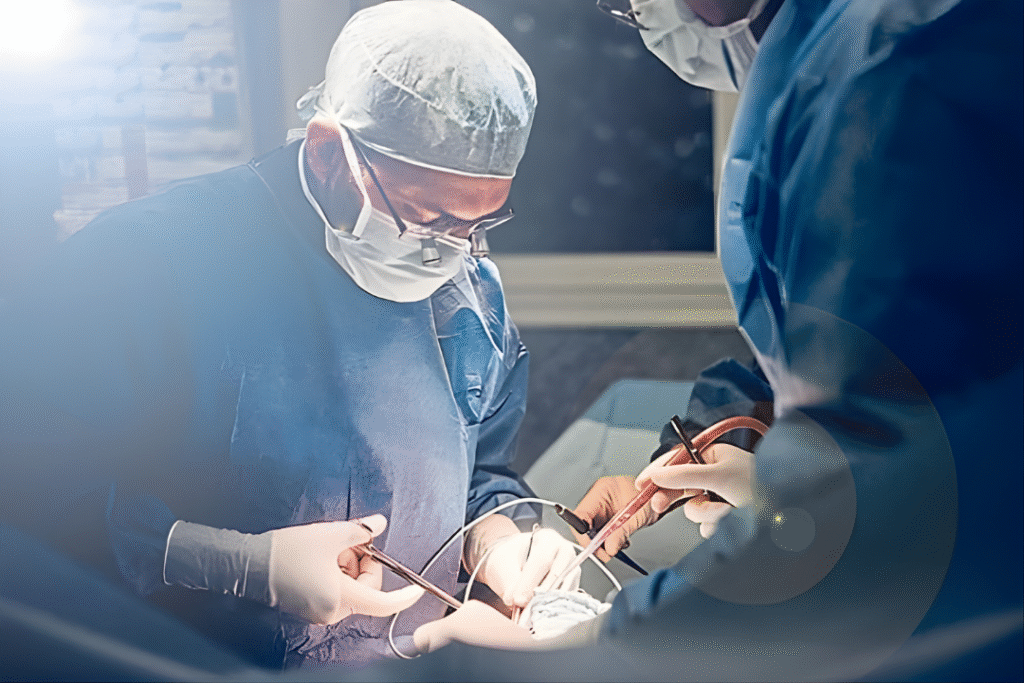
Dialysis Access Surgery
AV Fistulas, Grafts, Catheters and Revision Procedures (Open and Endovascular)
When Dialysis Access Care Is Needed
- Poor dialysis flows or repeated machine alarms
- Swelling or pain in the arm with the fistula or graft
- High venous pressures during dialysis
- Difficulty inserting needles
- Narrowing or hardening felt along the vein
- Prolonged bleeding after needle removal
- Infection in the access site
- A blocked or failing access
- Need for a new permanent access for dialysis
Types of Dialysis Access Offered
AV Fistula (Arteriovenous Fistula)
An AV fistula is the preferred and most durable form of dialysis access. It is created by joining an artery and a vein, allowing the vein to become stronger and larger over time. This provides an access point that is reliable and long-lasting.
Benefits include:
- Lowest risk of infection
- Long lifespan
- Better blood flow for efficient dialysis
- Reduced risk of clotting
AV Graft (Arteriovenous Graft)
A graft is used when veins are not suitable for a fistula. A soft synthetic tube connects the artery and vein to provide an access site.
Benefits include:
- Faster readiness for use
- Suitable for patients with small or weak veins
- Reliable option when fistulas are not possible
Dialysis Catheters
Used for:
- Emergency dialysis
- Temporary access while a fistula matures
- Patients who cannot undergo fistula or graft surgery
Maintenance and Revision of Access
Endovascular Procedures
- Balloon angioplasty to widen narrow areas
- Stent placement to maintain long-term flow
- Thrombectomy or clot removal
- Catheter-directed medication delivery
Benefits include:
- Small puncture instead of incision
- Quick recovery
- Immediate improvement in flow
- Short hospital stay
Open Surgical Revision
For complex cases or repeated access failure, open surgery may be needed to repair or reconstruct the access.
Benefits include:
- Durable long-term solution
- Effective for complex or recurrent problems
- Improved access flow and stability
Early intervention helps prevent sudden access loss and reduces the need for emergency catheters.
How Treatment Improves Dialysis Quality
- Smoother and more efficient dialysis sessions
- Better clearance results
- Fewer interruptions or alarms
- Reduced risk of infections and complications
- Improved long-term treatment stability
Frequently Asked Questions
How long does an AV fistula take to mature?
Is endovascular treatment safe for access issues?
Yes. It is minimally invasive and often the preferred first-line treatment for narrowing or blockage.